Diagnostic Radiology Residency Program
About the Program
UMC’s four-year Diagnostic Radiology Program was accredited in September 2025 and admits four new residents annually, totaling 16 residents. The program's first class started on July 1, 2026. This is UMC’s inaugural residency as a Sponsoring Institution, providing residents with the unique opportunity to influence and develop the program. Its aim is to prepare board-exam-ready residents with the advanced skills needed to excel across various environments, subspecialties or fellowships.
UMC Radiology offers a broad range of diagnostic imaging for inpatients and outpatients. The department employs state-of-the-art radiographic technology, including AIDOC-AI recognition and TeraRecon 3D imaging. Equipment includes 3T and 1.5T MRI machines, four newer Philips CT scanners, a 3D GE C-Arm and dose tracking systems.
More than 31 radiologists, all employed by the hospital, provide expert coverage across subspecialties such as cardiothoracic, musculoskeletal, pediatrics, abdominal/GI, ultrasonography, nuclear/molecular imaging, breast imaging, neuro radiology, neurointerventional radiology and general interventional radiology.
The department has two on-site Interventional Radiology suites performing 12 to 14 procedures daily, including complex interventions such as angiography, Y-90 treatments, ablations, aneurysm coiling, AVM repairs and cryotherapy.
UMC Radiology conducts more than 345,600 reads annually, averaging about 750 per day. The outpatient clinic programs see 1,400 patients yearly. The department holds multiple American College of Radiologists accreditations, is designated as a Lung Cancer Screen Center, and serves as a key component of UMC’s Comprehensive Stroke Center.
Our dedicated radiology team handles some of the area's most unique cases via services including Trauma, Burn, Pediatrics, Emergency Room, Transplant, Maternal Care, Outpatient Urgent and Primary Care, and Outpatient Orthopedic and Spine Care.
Block Schedule
The Diagnostic Radiology Residency utilizes 13, 4-week blocks per Academic Year.
The current rotation schedule is as follows but is subject to change:
| PGY-2 | PGY-3 |
|
|
| PGY-4 | PGY-5 |
|
|
Frequently Asked Questions
Is moonlighting allowed?
There is a GMEC-approved moonlighting policy. Moonlighting will be made at the discretion of the Program Director with performance taken into consideration and should be available to PGY3 residents and above.
How are didactics structured?
There will be daily, in-person didactic lectures from 1-2 PM, Monday-Friday. There will be a monthly literature review and journal club. Twice a month, there will be a case conference.
What resources do you have for board prep?
The Institution has purchased numerous academic subscriptions, including a robust medical library and physical reference books.
Do you have ESIR?
As a new program, we cannot yet apply for ESIR. However, IR is an integral part of the curriculum. UMC’s IR department is robust, completing complex procedures that many large, academic medical centers have not. While on an IR rotation, you will have the opportunity to participate in these complex cases.
How to Apply
Applications are only accepted through the Electronic Residency Application Service (ERAS).
NRMP Number: 2489420A0
The following documents are required:
- Curriculum Vitae
- Medical School Transcript
- MSPE
- Personal Statement
- At least three (3) Letters of Recommendation, one of which must be specialty-specific
- USMLE and/or COMLEX transcript
Additionally, for Foreign Medical School Graduates:
- A valid Education Commission for Foreign Medical Graduates (ECFMG) certification
Please ensure you are able to meet these employment requirements before applying.
All communication from the Program is sent through the ERAS system. All interviews are conducted virtually.
ACGME ID: 4203100002
Program Leadership
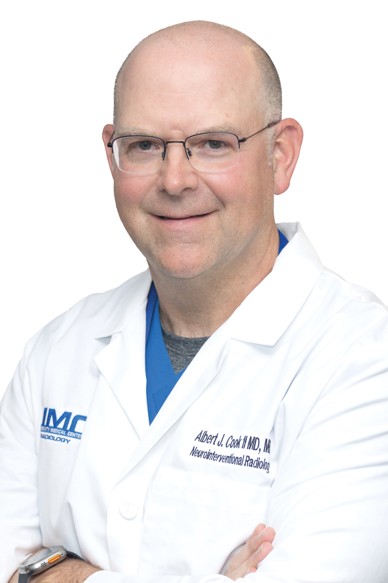 | 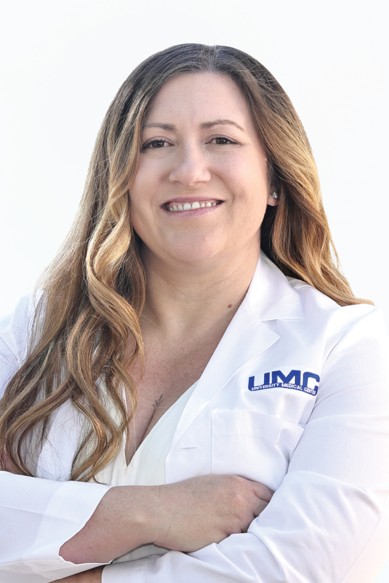 | 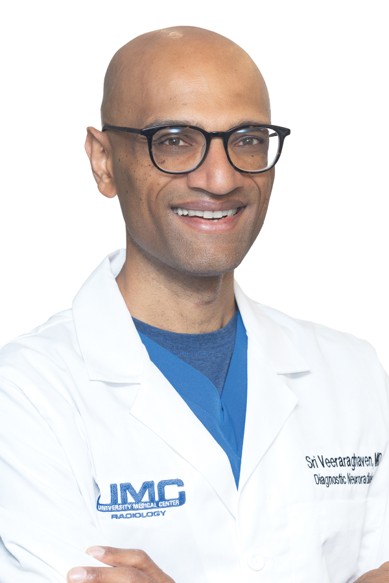 |
Albert Cook, MD, MBA Neurointerventional Radiologist Medical Director, Radiology Program Director, Diagnostic Radiology Residency | Kaci Dudley, MD, MPH Diagnostic Radiologist Associate Program Director, Diagnostic Radiology Residency Core Domain: Ultrasonography | Srivathsa Veeraraghavan, MD Diagnostic Radiologist Associate Program Director, Diagnostic Radiology Residency Core Domain: Neuroradiology |
Core Faculty
Jennifer Burns-Benggon, MD
Diagnostic Radiologist
Core Domain: Neuroradiology
Kevin Casper, MD
Diagnostic Radiologist
Core Domain: Nuclear/Molecular
Susan Cunningham, DO
Diagnostic Radiologist
Core Domain: Pediatrics
Eddie Escobar, MD
Diagnostic Radiologist
Core Domain: Musculoskeletal
Charles Ko, MD
Diagnostic Radiologist
Core Domain: Breast Radiology
Ryan Rimer, MD
Interventional Radiologist
Core Domain: Interventional Radiology
Peter Zhang, MD
Diagnostic Radiologist
Core Domain: Abdominal Imaging and Ultrasound
Faculty
Tony Bell, MD, Neurointerventional Radiologist
Brandon Chen, MD, Interventional Radiologist
Baljit Deol, MD, Neurointerventional Radiologist
Kyle DePew, PhD, Physicist
Alexander Kieger, MD, Interventional Radiologist
Michael Korczynski, DO, Diagnostic Radiologist
Warren Mays, MD, Diagnostic Radiologist
Louis Moore, MD, Diagnostic Radiologist
Chrystal Obi, MD, Diagnostic Radiologist
Donald Schultz, MD, Diagnostic Radiologist
Alexander Song, MD, Interventional Radiologist
Young Song, MD, Diagnostic Radiologist
Joshua Tew, MD, Diagnostic Radiologist
Our Residents: Class of 2030
Paul Desrochers, MD
St. George's University School of Medicine
Jeffrey Feng, MD
Western Michigan University Homer Stryker M.D. School of Medicine
Chase Permann, DO
Marian University Wood College of Osteopathic Medicine
Shina Zehnder, MD
University of Rochester School of Medicine and Dentistry
Our Residents: Class of 2031
Pooya Ganjali, DO
California Health Sciences University College of Osteopathic Medicine
Erica Latorre, DO
Idaho College of Osteopathic Medicine
Roland Leyson, MD
Drexel University College of Medicine
Uyen Nguyen, MD
University of California, San Diego School of Medicine
This translation is provided by Google Translate. University Medical Center of Southern Nevada makes no representations or warranties of any kind, whether express or implied, regarding the accuracy of the translation provided above.